
![[Yumelia Founding Story 2/3] Zero Customers, Zero Sales Projections. Yet, I Founded a Travel Company.](https://82aertddqwkn9c3f.public.blob.vercel-storage.com/uploads/Zy5MYOFIqfMh.png)
When I established Yumelia Inc., there were no customers for the travel business.
There were no confirmed orders, nor any future sales projections. I had no prior experience working for a travel agency, nor did I possess extensive connections within the travel industry.
Under normal circumstances, this situation presented too many uncertainties for starting a business.
Nevertheless, I started a travel company.
In this article, I will discuss why I launched a business from scratch with zero customers, my first client, the challenges I discovered as a business owner, and the structural changes I aim to bring to the travel industry through Yumelia.

Zero Customers, But Not Unplanned
I had no intention of relying solely on the revenue from the travel business for the company's survival.
At Yumelia, in addition to travel, we also operate a consulting business. In the early stages of founding, I adopted a strategy of nurturing the travel business while securing revenue through consulting.
One could say I bought myself time until the travel business could stand on its own feet. Having no customers is not the same as being unplanned.
Few people can start a business with sufficient sales from day one. What's crucial is whether you can create a structure that allows you to continue challenging yourself until revenue is generated.
I wasn't particularly afraid of investing capital into the company. It's natural that funds are required when establishing a company. Rather than just considering the possibility of loss, I focused on how far I could grow the business using those funds.
The bolder a decision appears, the more crucial it is to have established conditions for its sustainability behind the scenes. This is a philosophy I still value greatly in managing Yumelia.
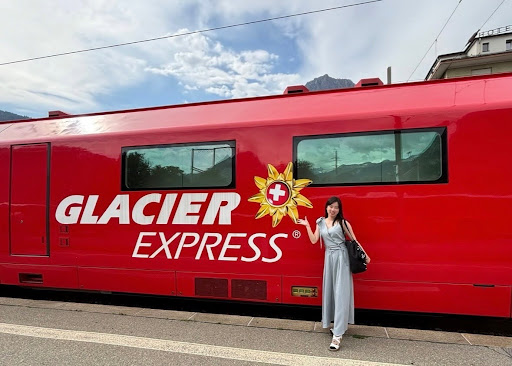
My First Job: Assisting a Client from Taiwan
My first travel-related assignment was assisting a client from Taiwan, introduced through an acquaintance.
I guided them through Shibuya, Tokyo, and in the evening, we dined together at an exclusive Japanese restaurant accessible only by referral.
While it was a small step for a travel company, it was a significant event for me.
Until then, Yumelia's services existed only in my mind. Although I had contemplated what kind of experiences I wanted to offer to what kind of clients, I had never actually received payment and delivered a service. Seeing the client in front of me enjoy their time in Japan and say, "I would definitely like to ask for your help again when I return to Japan," was incredibly rewarding.
It was the moment when something I had envisioned finally materialized as a legitimate business.
That client had chartered a private jet from Taiwan, spending tens of millions of yen to visit Japan. This experience made me realize there was a clear demand for travel services catering to high-net-worth individuals.
What is sought after is not merely an itinerary filled with expensive hotels and restaurants. It's access to places generally unavailable for booking, efficient travel that avoids wasted time, and proposals tailored to the individual's hobbies and values.
The true value a travel company can provide lies in offering what clients cannot arrange themselves.
Expensive is Not the Same as Exquisite
I believe there is significant room for improvement in the luxury travel market.
Simply attaching the label "for high-net-worth individuals" can inflate prices, leading to products where the actual experiential value doesn't match the cost. Staying in luxury hotels, traveling in high-end cars, and dining at famous restaurants alone do not constitute a trip designed for the client.
Yumelia aims to offer more than just high-priced travel. We design experiences that perfectly suit each individual, understanding their travel objectives, culinary preferences, past travel experiences, relationships with companions, and even what they wish to avoid during their trip.
If necessary, we tackle requests for access to exclusive locations or complex arrangements that typical travel agencies might find challenging.
At the same time, I don't want luxury travel to be exclusive to only the ultra-wealthy. I want to deliver value-for-money travel to those who wish for a little indulgence once a year, or a special experience for an anniversary.
Luxury is not about being expensive; it's about being tailor-made for you.
The Toughest Challenge After Founding: People
The greatest challenge I've faced since starting a travel company isn't arranging travel.
It's assembling a team of colleagues and ensuring everyone works to the same standards.
Among my peers from PwC and the University of Tokyo, there are many capable and trustworthy individuals. However, a newly founded company cannot offer the same compensation as large corporations or consulting firms.
Therefore, I'm building the organization by bringing in students and individuals from different industries.
Naturally, there are differences in work speed, quality, sense of responsibility, and enthusiasm. The standards I consider obvious are not necessarily shared by others. Previously, I thought that hiring talented people would solve all problems.
Now, I understand that recruitment alone is insufficient. It's about articulating the desired outcomes. Designing tasks according to each person's experience. And not neglecting necessary follow-ups even after delegating.
Many issues related to people stem from business owners failing to communicate expectations precisely.
Building a company isn't about finding people identical to yourself. It's about creating a system where individuals with diverse abilities can produce results of consistent quality. I am still in the midst of this trial-and-error process.
The Meaning of "A Business Owner's Solitude"
Businesses often don't proceed as planned.
Sometimes, communication with stakeholders goes awry during travel arrangements, or problems arise in consulting projects.
Even after trusting and delegating tasks, the expected results may not materialize. Employees can consult their superiors when they encounter difficulties. A business owner has no one to whom they can ultimately defer decisions.
Who to hire? Which projects to accept? How much to charge? When problems arise, who should be held accountable and to what extent? While I can seek opinions, the final decision rests with me. Only recently have I come to understand the meaning of the phrase, "A business owner is solitary."
Nevertheless, I have no desire to return to my corporate employee days. I can pitch to companies that interest me, take on work I enjoy, and choose the people I want to work with. The responsibility of making decisions and the freedom to make them are two sides of the same coin. Even with the difficulties, I find my current way of working overwhelmingly more engaging.
Convenient on the Surface, Yet Antiquated Behind the Scenes in Travel Agencies
Services for travelers have rapidly become more convenient. One can compare hotels and flights on a smartphone and book them instantly. Looking solely at individual travel, the tourism industry appears to be sufficiently digitized.
However, behind the scenes of travel agencies, old systems persist. Visiting each business partner one by one to exchange greetings. Handling bookings and changes via phone calls and emails. Dealing with paper-based documents. Entering specialized codes, often incomprehensible to users, to arrange airline tickets. Even as the screens travelers interact with become more convenient, the operations of those providing travel services have not changed significantly.
Particularly in transactions between registered travel businesses, corporate travel, and complex arrangement domains, information remains fragmented.
Instead of merely refining the front-end, we need to transform the very mechanisms by which travel agencies operate.

What I Aim to Change in Travel with AI
At Yumelia, we are also conceptualizing a business that leverages AI to transform the structure of travel operations. Specific details cannot yet be disclosed due to competitive reasons.
However, we have no intention of creating a service that merely has AI suggest tourist destinations. Many services already offer itinerary generation in text format.
What I aim to change are the inefficient internal operations that persist within travel agencies and the fragmented state of information among businesses.
I want to create an environment where travel agencies can focus on client proposals and relationship building by distinguishing between tasks that humans should perform and those that should be entrusted to AI.
The term "DX" (Digital Transformation) in the travel industry has been used for a long time, but simply making booking screens more convenient for users is insufficient. Only when the industry's backend truly transforms will travel prices, delivery speed, and service quality change.
Towards a Company Handling Even Space Travel
I do not intend for Yumelia to be a company that deals only with currently existing forms of travel. Inbound travel, corporate travel, corporate inspections, luxury travel.
From there, I want to expand our scope to include journeys to view Earth from the stratosphere, deep-sea exploration, expeditions to the polar regions, and even space travel.
Even journeys currently experienced by only a select few will see markets emerge with technological advancements. Just as overseas travel was once a special privilege, space travel may no longer be exclusive to a few in the future. At that time, I want Yumelia to be a company that designs the entire experience—movement, stay, training, safety, and ground-based activities—rather than merely selling seats.
Yumelia aims to be a company that expands the horizons of travel, not just one that books trips.
Though I started this company with zero customers, the market I aspire to is not limited to the current travel industry.
Next time, I will write about why I needed to leave PwC, despite its privileged environment. I will discuss the limitations I felt as a corporate employee and the true reasons I chose entrepreneurship.