
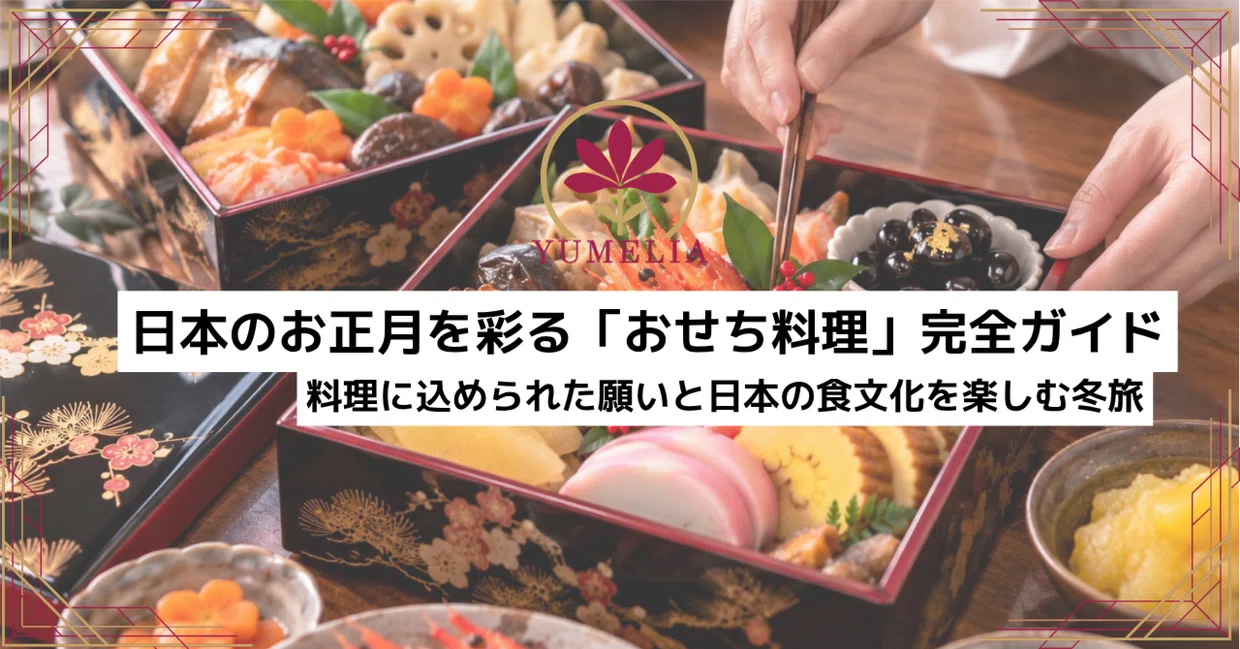
Osechi Ryori, the traditional cuisine symbolizing Japan's New Year, is a sight to behold. The vibrant dishes, beautifully arranged in tiered lacquer boxes, are an iconic part of Japan's New Year landscape.
However, the allure of Osechi Ryori extends beyond its visual splendor and exquisite taste. Each dish carries a heartfelt prayer for the new year: black beans for good health, herring roe for prosperity of descendants, and kuri kinton for a year of abundance. Every item is imbued with wishes for the year ahead.
Furthermore, the contents of Osechi Ryori vary by region and household, offering fascinating insights into local food culture and history.
To truly immerse yourself in Japan's year-end and New Year traditions, we invite you to savor Osechi Ryori not merely as a seasonal meal, but as a cherished cultural practice that Japanese people have held dear in welcoming the new year.
This article provides a comprehensive guide, from the origins of Osechi Ryori and the meanings embedded in its representative dishes, to regional characteristics and practical ways for international visitors to enjoy this culinary tradition.
1. What is Osechi Ryori? A Traditional Culture Celebrating Japan's New Year
Origins of Osechi Ryori
The word "osechi" in Osechi Ryori is said to originate from seasonal ceremonies marking the turning points of the year.
In ancient times, at the imperial court, there was a custom of offering food to the gods at seasonal junctures and partaking in celebratory dishes. This culture of ceremonial food was passed down through generations, eventually leading to the celebratory dishes eaten during the New Year being called "Osechi Ryori."
Japan's New Year is not merely an event to celebrate the beginning of a new year. Traditionally, it has been regarded as an important milestone for welcoming the Toshigami (New Year deity) into the home and praying for abundant harvests, family health, and a happy year.
Osechi Ryori is deeply intertwined with these New Year beliefs and customs.
Preparing the dishes, gathering around the table with family, and expressing gratitude for having welcomed the new year—this embodies the seasonal events and food culture that Japanese people have cultivated over a long period.
*Traditions and customs may vary by region and household.
Why is Osechi served in tiered lacquer boxes (jubako)?
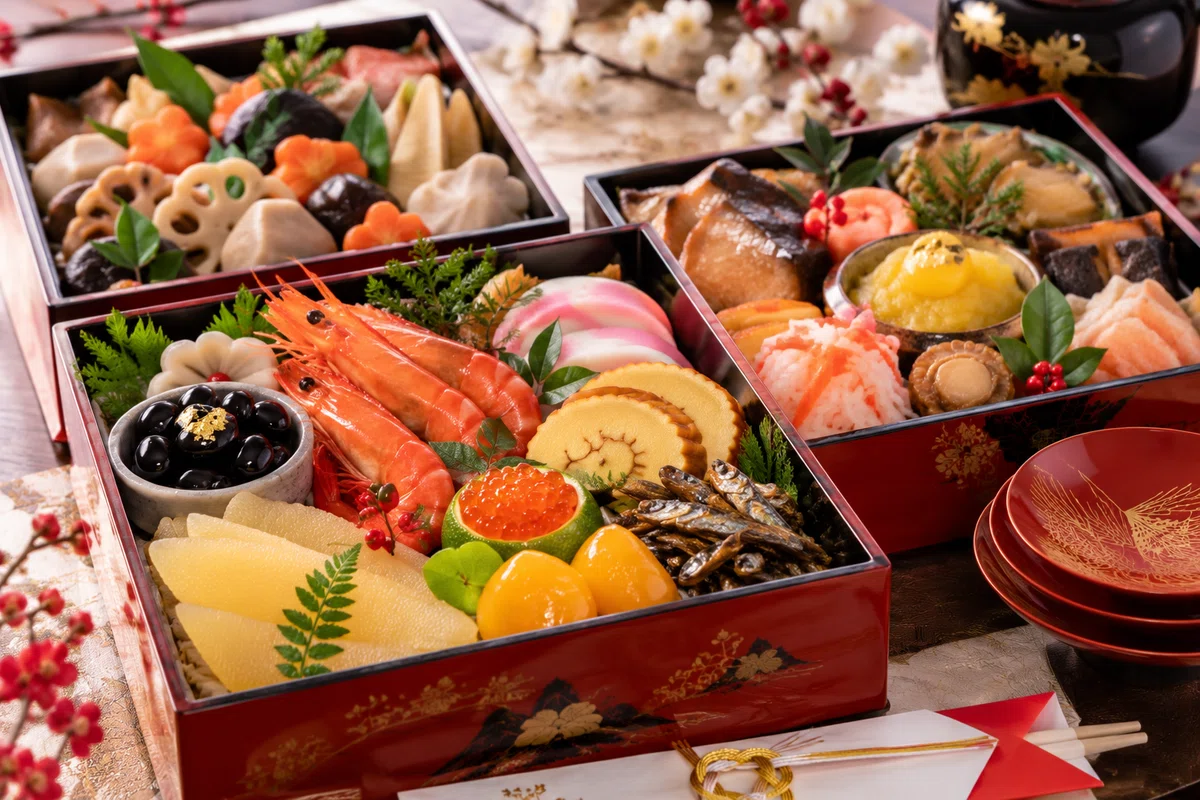
A defining characteristic of Osechi Ryori is the beautiful arrangement of various dishes in tiered lacquer boxes.
It is said that the jubako symbolizes wishes for "piling up good fortune" and "happiness accumulating layer upon layer."
Inside the jubako, a balanced assortment of dishes with varying flavors and colors is arranged, including celebratory appetizers like black beans and herring roe, sweet dishes like kuri kinton, seafood, and simmered dishes.
The contrast created by the black or vermilion jubako and ingredients in gold, red, green, and white is also part of Osechi Ryori's allure.
In modern times, beyond traditional lacquer jubako, styles using ceramic or wooden vessels, or even Western-style plates, can be seen. While cherishing tradition, the ways to enjoy Osechi are expanding to suit contemporary lifestyles.
2. Osechi Ryori Becomes Even More Enjoyable When You Know the Meaning of Each Dish
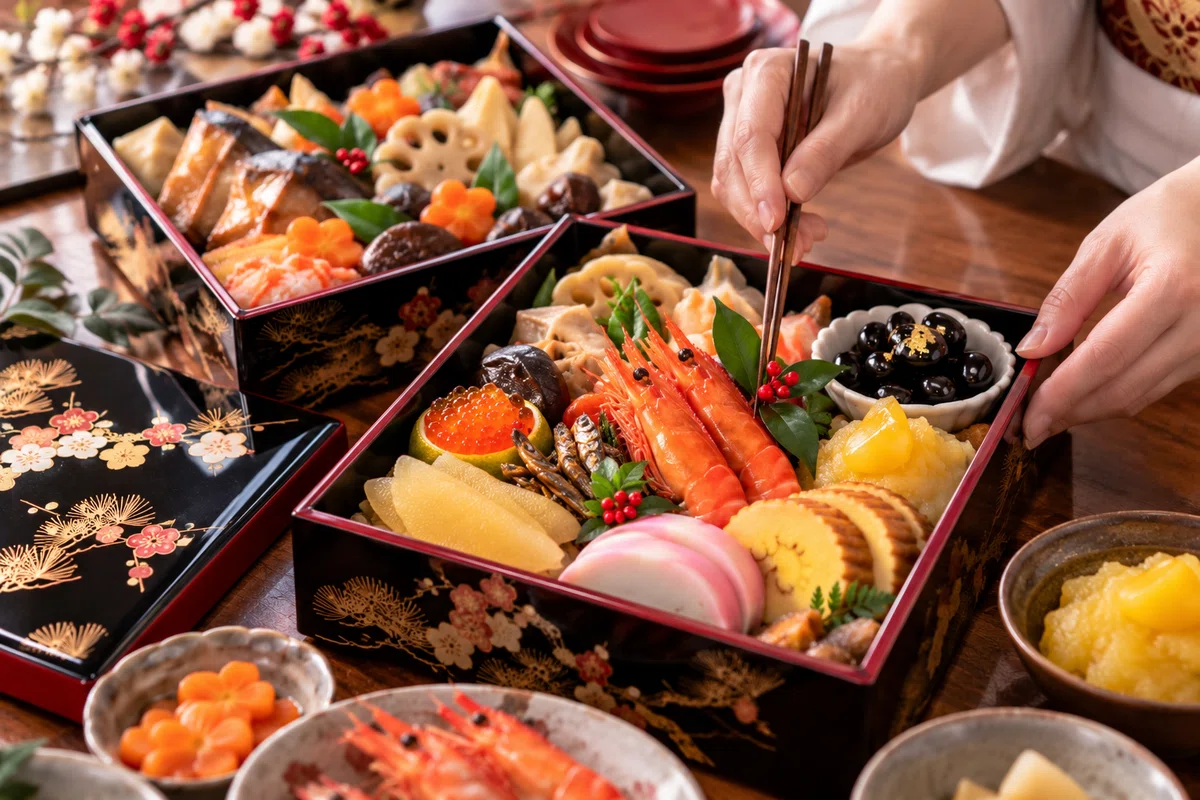
Many Osechi dishes contain wishes for the new year, derived from the ingredients' names, shapes, colors, or wordplay.
Knowing the meanings of representative dishes will deepen your enjoyment when you actually taste them.
Kuromame (Black Beans) | For a Year of Health and Diligent Work
Kuromame (black beans) are a quintessential Osechi dish.
The word "mame" (bean) also carries the meaning of being healthy and working diligently.
It embodies the wish to spend the year energetically and to work hard in one's job and daily life.
Glossy black beans are characterized by their sweet and plump texture. Though a simple dish, the sweetness and cooking method vary by household.
Kazunoko (Herring Roe) | For Prosperity of Descendants and Family
Kazunoko, herring roe, is cherished as a lucky charm symbolizing prosperity of descendants due to the vast number of eggs it contains.
It carries the wish for family prosperity and for life to be passed down to the next generation.
It features a firm texture and is seasoned with dashi (broth) and soy sauce. As a dish using fish roe, it will be an interesting item for international travelers to learn about Japanese food culture.
Tazukuri (Candied Sardines) | A Wish for Abundant Harvests
Tazukuri is a dish of small fish seasoned with a sweet and savory sauce.
Its origin lies in the past practice of using small fish as fertilizer for rice fields, leading to bountiful harvests, and thus it is known as a dish wishing for rich harvests.
It features the savory aroma of small fish and a sweet-savory taste, offering a relatively robust flavor among Osechi dishes.
Tataki Gobo (Pounded Burdock Root) | For Family Prosperity and Stability
Burdock root, which grows deep into the soil, is considered an ingredient that wishes for the stability of the household and life, and long-lasting prosperity.
Tataki Gobo is a dish where burdock root is pounded to loosen its fibers and allow the flavors to meld.
It is characterized by its rich flavor using sesame and vinegar, and the seasoning varies by region and household.
Kohaku Kamaboko (Red and White Fish Cake) | Celebration and the Start of a New Year
Red and white kamaboko is a popular ingredient at celebratory occasions.
Red is said to ward off evil, and white represents purity, so the combination of red and white itself signifies celebration.
Furthermore, the semi-circular shape of kamaboko is also said to resemble the first sunrise of the year.
Its vibrant colors brighten the entire meal, playing an important role in Osechi Ryori's presentation.
Datemaki (Sweet Rolled Omelet) | For the Development of Knowledge and Culture
Datemaki is a sweet, fluffy dish made with eggs and fish paste.
Its shape, reminiscent of scrolls or books, is said to embody wishes for the advancement of learning, knowledge, and culture.
It features a gentle sweetness and soft texture, making it popular with both children and adults.
Kuri Kinton (Sweet Chestnut Paste) | For Abundance and Financial Fortune
Kuri Kinton is a golden-colored dish made with chestnuts and sweet potatoes.
Written with the kanji "金団" (gold lump), it evokes images of gold and treasure, making it a lucky charm for a prosperous year.
Its vibrant yellow color and natural sweetness make it a standout presence in the jubako.
Ebi (Shrimp) | For Longevity and Health
Shrimp, with its long whiskers and bent back, is associated with the appearance of an elderly person, making it a symbol of longevity.
It embodies the wish to spend the new year in good health and live a long, happy life.
Preparation methods vary, such as grilled or simmered shrimp, and their vibrant red color beautifully adorns the celebratory table.
Kobumaki (Rolled Kelp) | For a Year Full of Joy
Konbu (kelp) is cherished as an auspicious ingredient because its name sounds similar to "yorokobu" (to be joyful).
Kobumaki, where fish or other ingredients are rolled in kelp, is one of the dishes that signifies celebration.
The umami of the kelp harmonizes with the flavor of the fillings, offering a deep, distinctly Japanese taste.
Kohaku Namasu (Red and White Pickled Daikon and Carrot) | For Peace and Harmony
Kohaku Namasu, finely julienned daikon radish and carrots dressed in vinegar.
The red and white colors represent celebration, and its refreshing acidity cleanses the palate between sweet or rich dishes.
It is a dish that combines culinary beauty with a balanced flavor.
Renkon (Lotus Root) | For Foresight into the Future
Lotus root, with its holes, is sometimes associated with the meaning of "being able to see through to the future."
It expresses the wish for a year with clear prospects and hope for the future.
Its crisp texture is also appealing, and it is incorporated into Osechi in various forms, such as simmered dishes or vinegared salads.
Nishime (Simmered Vegetables) | For Family Bonds
Nishime is a dish where root vegetables, shiitake mushrooms, konnyaku, and other ingredients are simmered together.
Because multiple ingredients are cooked together in one pot, it is sometimes associated with the wish for family unity and harmonious living.
The ingredients used—such as taro, lotus root, burdock root, and carrots—as well as the cutting methods and seasoning, vary by region and household.
Knowing the meaning of each ingredient reveals that even a single plate of simmered vegetables expresses wishes for the new year.
3. Japanese New Year Cuisine Varies by Region
Osechi Ryori in Japan is not the same nationwide.
The ingredients used and the seasoning change according to the local climate, specialty products, history, and culinary preferences.
Kanto Region's Osechi Ryori
In the Kanto region, including Tokyo, traditional Osechi dishes like kuromame, kazunoko, tazukuri, datemaki, kuri kinton, and nishime are popular.
Many dishes feature a sweet and savory soy sauce-based seasoning, characterized by flavors that highlight the umami of the ingredients.
However, menus vary by region and household even within the Kanto area, and in modern times, Osechi incorporating Western or Chinese-style dishes is also popular.
Kyoto and Kansai Region's Osechi Ryori
In the Kansai region, including Kyoto, New Year dishes are seen that are deeply connected to traditional Kyoto cuisine and local food culture.
In Kyoto cuisine, the natural flavors of ingredients, seasonality, and the beauty of presentation have been highly valued. In Osechi Ryori too, a delicate aesthetic sense can sometimes be observed in the way ingredients are cut, their colors, and their harmony with the serving vessels.
Furthermore, one of the popular dishes for New Year in Kyoto is zoni (rice cake soup) prepared with white miso.
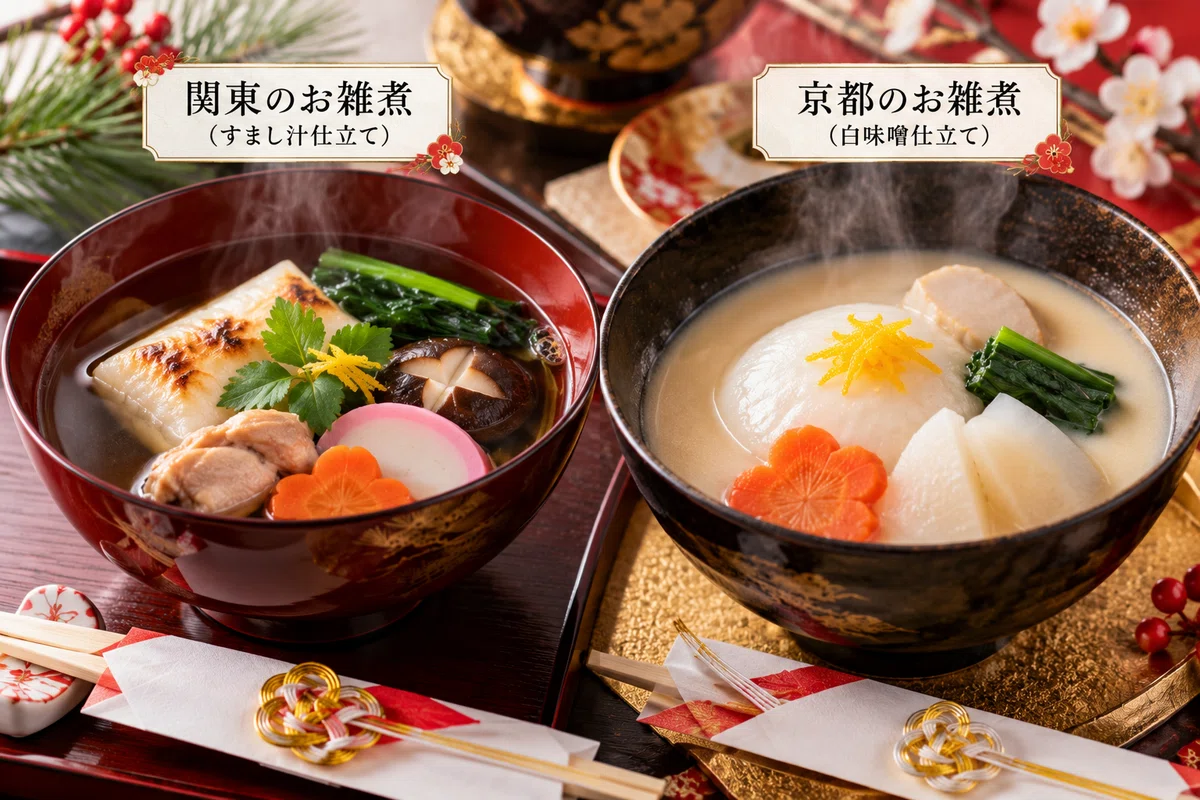
White miso zoni, made with round mochi, daikon radish, and taro, offers a different flavor from the soy sauce-based clear soup zoni commonly seen in Kanto.
Hokkaido and Tohoku Regions
In Hokkaido and the Tohoku region, New Year dishes that utilize local seafood and agricultural products are common.
There is also a history of utilizing ingredients that are easy to preserve in cold seasons, so seafood and unique local specialties may appear on the New Year's table.
Even within the same region, there are differences in ingredients and dishes between coastal and inland areas. Tasting local New Year dishes at your travel destination can be an opportunity to learn about the local way of life.
Kyushu Region
In the Kyushu region, New Year dishes that make use of seafood and local ingredients are popular.
For example, in Fukuoka, zoni made with yellowtail (buri) is well-known. Zoni is a separate dish from Osechi Ryori, but both are indispensable for understanding New Year food culture.
Comparing the traditional dishes of each region reveals that Japanese food culture is not a single fixed form, but rather has been nurtured by the history and lifestyle of each locality.
4. "Zoni" – A Dish to Savor Alongside Osechi Ryori
On the Japanese New Year's dining table, "zoni" appears alongside Osechi Ryori.
Zoni is a soup dish centered around mochi (rice cakes), combined with dashi, vegetables, meat, and fish. Regional differences are very significant, with appearance and taste varying greatly even within Japan.
In Kanto, Clear Soup Style is Common
In the Kanto region, including Tokyo, zoni often features a soy sauce-based clear soup with grilled square mochi, chicken, leafy greens, and kamaboko.
It is characterized by a clean taste that highlights the dashi flavor.
In Kyoto, White Miso Style
In Kyoto, zoni made with white miso is traditionally popular.
It has the mellow sweetness unique to white miso and is combined with round mochi, daikon radish, and taro. Ingredients and preparation methods vary by region and household.
Mochi Shape Also Differs by Region
The differences in zoni are not limited to the soup's flavor; regional characteristics are also reflected in the shape of the mochi.
Common Styles in Eastern Japan ・Mochi shape: Square mochi ・Soup flavor: Often soy sauce-based clear soup ・Preparation method: Mochi is often grilled before being added
Common Styles in Western Japan ・Mochi shape: Round mochi ・Soup flavor: White miso-based styles are also seen ・Preparation method: Mochi is often simmered until soft
These are general tendencies, and there are exceptions depending on the region and household.
Furthermore, unique styles can be seen, such as zoni using mochi filled with red bean paste in Kagawa Prefecture, and zoni made with adzuki beans in the San'in region.
If you compare New Year dishes from different regions during your travels, you will gain a deeper appreciation for the profoundness of Japanese food culture.
5. How International Travelers Can Enjoy Osechi Ryori
Osechi Ryori is an attractive experience for international travelers who wish to immerse themselves in Japanese food culture.
However, traditional Osechi has a strong aspect of being home-cooked, and it is not something that can be ordered year-round at regular restaurants.
If you are visiting Japan during the year-end and New Year period, consider the following methods, tailored to your travel itinerary.
New Year Dining at Luxury Hotels
Luxury hotels may offer special year-end and New Year menus, or Japanese cuisine unique to the New Year.
The ways to enjoy it vary by establishment, including Osechi-inspired breakfasts, celebratory meals (iwai-zen), or seasonal limited-time courses at Japanese restaurants.
The appeal is experiencing the taste of Japanese New Year along with the sophisticated service unique to hotels.
Be sure to check the availability dates, whether non-guests can use the service, if reservations are required, and what is included in the price. The quantity and enjoyment differ between a full Osechi in a jubako, a single breakfast dish, and a celebratory meal.
Experiencing Japanese New Year at a Ryokan
Spending the year-end and New Year at a hot spring ryokan or a traditional inn is another way to enjoy Osechi Ryori.
Some ryokans offer special New Year dishes, celebratory meals, or seasonal cuisine incorporating local ingredients.
Soaking in hot springs, welcoming the new year in a tranquil setting, and savoring dishes made with local ingredients—such a stay is ideal for travelers who wish to slowly experience Japan's seasonal culture.
The charm also lies in enjoying different atmospheres depending on the destination, such as Kyoto's historic townscapes, the hot spring resorts of Hakone and Izu, or Hokkaido's snowy landscapes.
Enjoying Seasonal Celebratory Meals at Specialty Japanese Restaurants
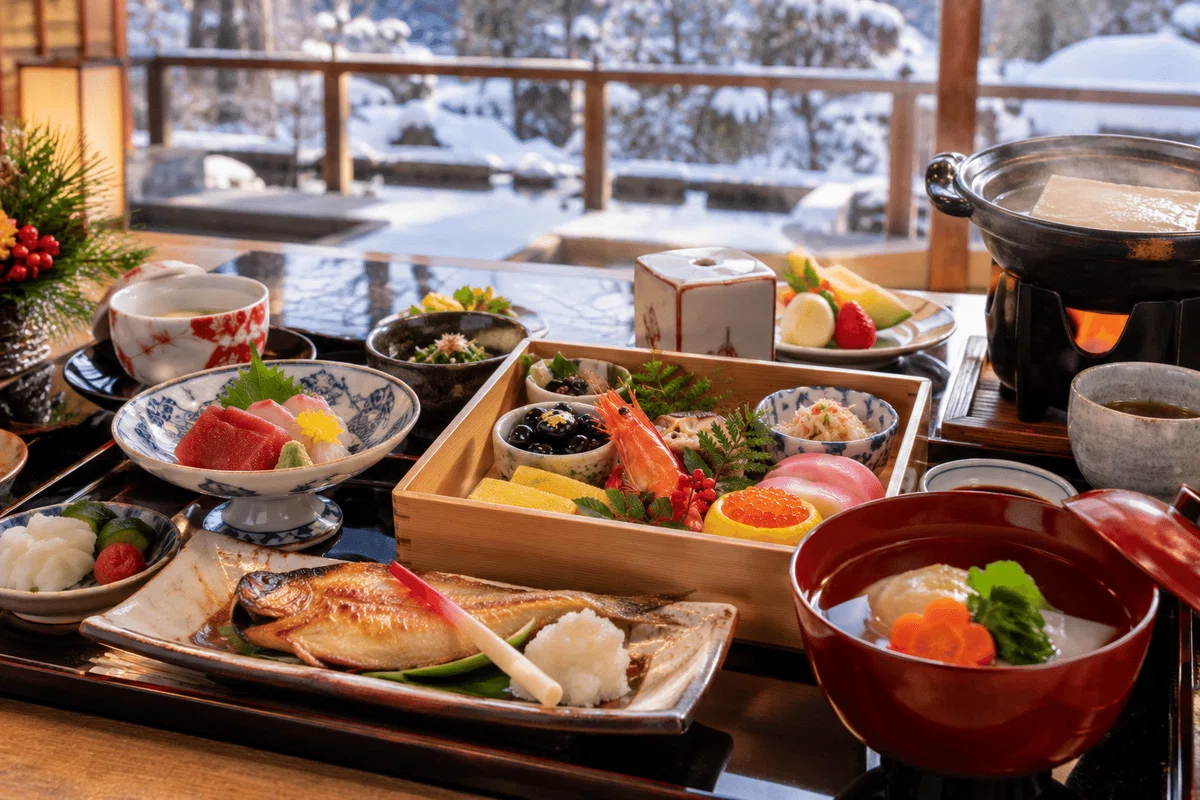
Even if not Osechi Ryori itself, you can experience Japanese food culture through special Japanese courses or celebratory meals offered during the year-end and New Year period.
In kaiseki or kaiseki ryori, you can sometimes feel Japan's unique aesthetic sense through seasonal ingredients, tableware, and presentation.
If the restaurant's chef explains the background of the ingredients and cooking methods, you can not only taste the food but also learn about the meanings embedded in the dishes.
Learning Osechi Culture Through Cooking Experiences
For those interested in Japanese home cooking and traditional foods, cooking classes or private cooking experiences are also recommended.
Learning about the meaning of black beans, how to make dashi, and ingredients used for celebratory occasions will deepen your understanding of Osechi Ryori.
Even if you don't make all the dishes from scratch, just trying to make a few, such as datemaki or kohaku namasu, can make you feel closer to the food culture.
Please note that the year-end and New Year period is a busy time for popular accommodations and restaurants. If you wish for special menus or experience programs, it is advisable to check the availability period and reservation conditions early.
6. Why is Osechi Ryori Prepared at the End of the Year?
Most Osechi Ryori is prepared at the end of the year and eaten during the New Year.
This custom is related to culinary ingenuity for preservation and lifestyle habits for welcoming the New Year.
In times without refrigerators or modern preservation facilities, simmered dishes, sweet-simmered beans, and vinegared dishes were utilized to preserve food to some extent.
Furthermore, during the first three days of the New Year, there was a belief in celebrating the new year with family and taking a short break from daily chores. Preparing meals at the end of the year was also said to reduce the burden of cooking at the beginning of the year.
Of course, with changes in lifestyle, the methods of preparing Osechi Ryori have also diversified.
Some families make each dish by hand at home, while others purchase them from specialty stores, department stores, or hotels. Not only traditional Japanese-style Osechi, but also those filled with Western or Chinese dishes, and compact Osechi for smaller groups, are chosen.
Perhaps what is important is not just adhering to a fixed format, but expressing the feeling of celebrating the new year at the dining table.
7. What to Know When Savoring Osechi Ryori
To enjoy Osechi Ryori, you don't need to memorize all the complex etiquette. However, knowing a few key points can help you appreciate the dishes more deeply.
First, Enjoy the Appearance and Presentation
Osechi Ryori is meticulously crafted not only in taste but also in color and arrangement.
Colors like red, white, black, yellow, and green overlap, creating a vibrant scene within the jubako. Before eating, take a moment to appreciate the variety of dishes and the beauty of their presentation.
Savor the Dishes After Learning Their Meanings
Knowing the wishes embedded in each dish, such as black beans, herring roe, and kuri kinton, will change your impression of each item.
Eating while imagining what Japanese people have wished for in the new year transforms it into an experience beyond just a meal.
Check Ingredients and Allergens
Traditional Osechi Ryori may include dishes made with seafood, eggs, soybeans, sesame, and other ingredients.
If you have food allergies or dietary restrictions, please check the ingredients used before ordering. If you desire vegetarian or vegan options, it is recommended to consult in advance to see if they can be accommodated.
Also, as many dishes use seafood and fish roe, it is reassuring to inform them at the time of reservation if you have any disliked ingredients.
8. Welcoming a Uniquely Japanese New Year with Osechi Ryori
In addition to Osechi Ryori, Japan's New Year offers seasonal delights such as hatsumode (first shrine visit of the year), hatsuhinode (first sunrise of the year), New Year temple/shrine visits, and stays at hot springs.
In Tokyo, you can enjoy urban splendor and traditional temple/shrine culture; in Kyoto, historic townscapes and Japanese food culture; and in hot spring resorts, tranquil time surrounded by nature.
When planning a winter trip, checking not only accommodation and meals but also year-end/New Year business hours, public transport schedules, and temple/shrine visiting hours in advance will ensure a smoother experience.
Osechi Ryori is a traditional Japanese culture where each dish embodies wishes for the new year, shared with family and loved ones.
Understanding the meaning of the dishes, savoring regional differences, and spending New Year's time at a leisurely pace—through such experiences, your winter journey in Japan will become even more special.
At Yumelia, we assist in planning trips that incorporate Japanese food culture and seasonal events, tailored to our customers' interests and travel styles.
If you wish to experience a uniquely Japanese New Year, why not incorporate traditional food culture into your year-end and New Year travels?
9. A Luxurious New Year with Hotel Okura's Osechi
One of the joys that adorns Japan's New Year is savoring dishes that are a little more luxurious than usual.
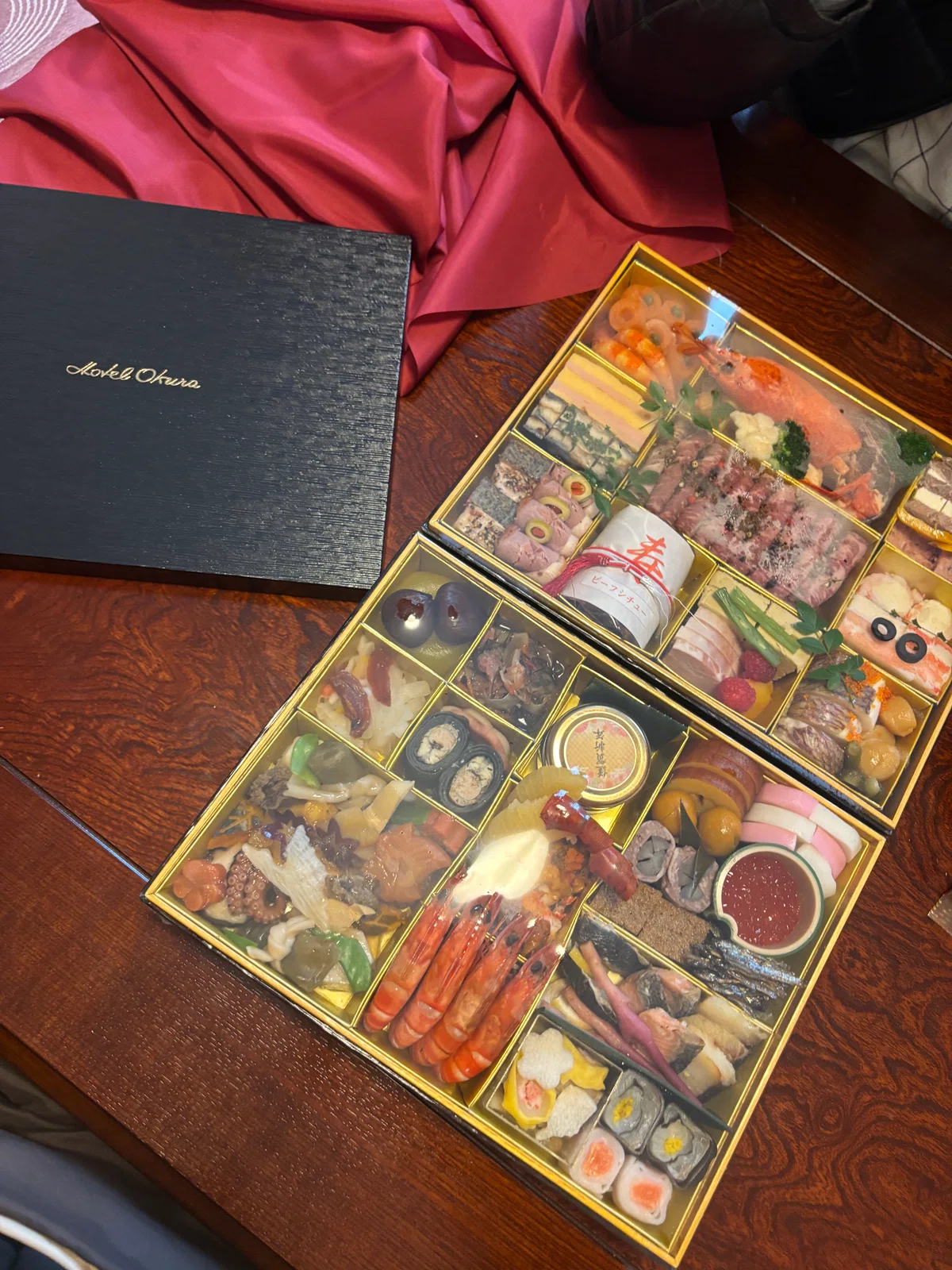
I, too, ordered Osechi Ryori from Hotel Okura for last year's New Year. The price was approximately 70,000 yen. It was a product typically reserved in advance at department stores, and it transformed the usual New Year into a special occasion.
Enjoying Hotel Cuisine at Home: A Japanese-Western Fusion Osechi
Hotel Okura's Osechi includes products that combine the tradition of Japanese cuisine with the splendor of Western cuisine.
For example, the "Hotel Okura Japanese-Western Osechi Two-Tiered Box" sold at department stores offers a style where you can enjoy both Japanese and Western dishes at once. It is a visually splendid dish, filled with cuisine suitable for a celebratory occasion.
When one thinks of Osechi Ryori, many might imagine traditional Japanese dishes like black beans, herring roe, and datemaki. On the other hand, Osechi prepared by hotels, while valuing tradition, sometimes incorporate Western dishes like roast beef and terrines, allowing for a wide range of flavors.
Enjoying Hotel-Made Osechi by Reserving at Department Stores
Osechi from luxury hotels can sometimes be reserved not only on the hotel's official website but also through online stores of department stores and specialty food shops.
As popular items may sell out early during the year-end and New Year period, it is advisable to start checking information around autumn and compare prices, dish contents, and pickup methods.
Furthermore, even for Osechi from the same hotel, the product composition and price may differ depending on the sales year and retailer. Whether it is refrigerated or frozen, and the delivery date, are also points to confirm before ordering.
Learning About Japanese New Year Culture Through Cuisine
The charm of Osechi Ryori is not limited to its luxurious ingredients or beautiful presentation.
Opening the jubako and savoring each dish, celebrating the beginning of a new year with family and loved ones—that time itself is a unique Japanese New Year experience.
Enjoying the diverse cuisine unique to hotels while understanding the wishes embedded in traditional dishes—such a way of spending time can also be an opportunity to learn more deeply about Japanese food culture.
For international travelers visiting Japan during the year-end and New Year, Osechi Ryori is an attractive gateway to experiencing seasonal culture. Why not not only savor the celebratory meals at hotels and ryokans, but also pay attention to how Japanese people welcome the new year and the customs behind it?
*Product names, prices, and contents vary by sales year and retailer. Please check the official information from each seller for the latest details.
References
・Ministry of Agriculture, Forestry and Fisheries "Osechi Ryori: Packing Prayers for Happiness" ・Ministry of Agriculture, Forestry and Fisheries "Various Zoni Across Japan" ・Ministry of Agriculture, Forestry and Fisheries "Our Local Cuisine" Explanations of Zoni in Each Region
This article is structured with the purpose of introducing the origins and food culture of Osechi Ryori, referencing the public information above.
*Includes AI-generated images.